
Subtotal $0.00

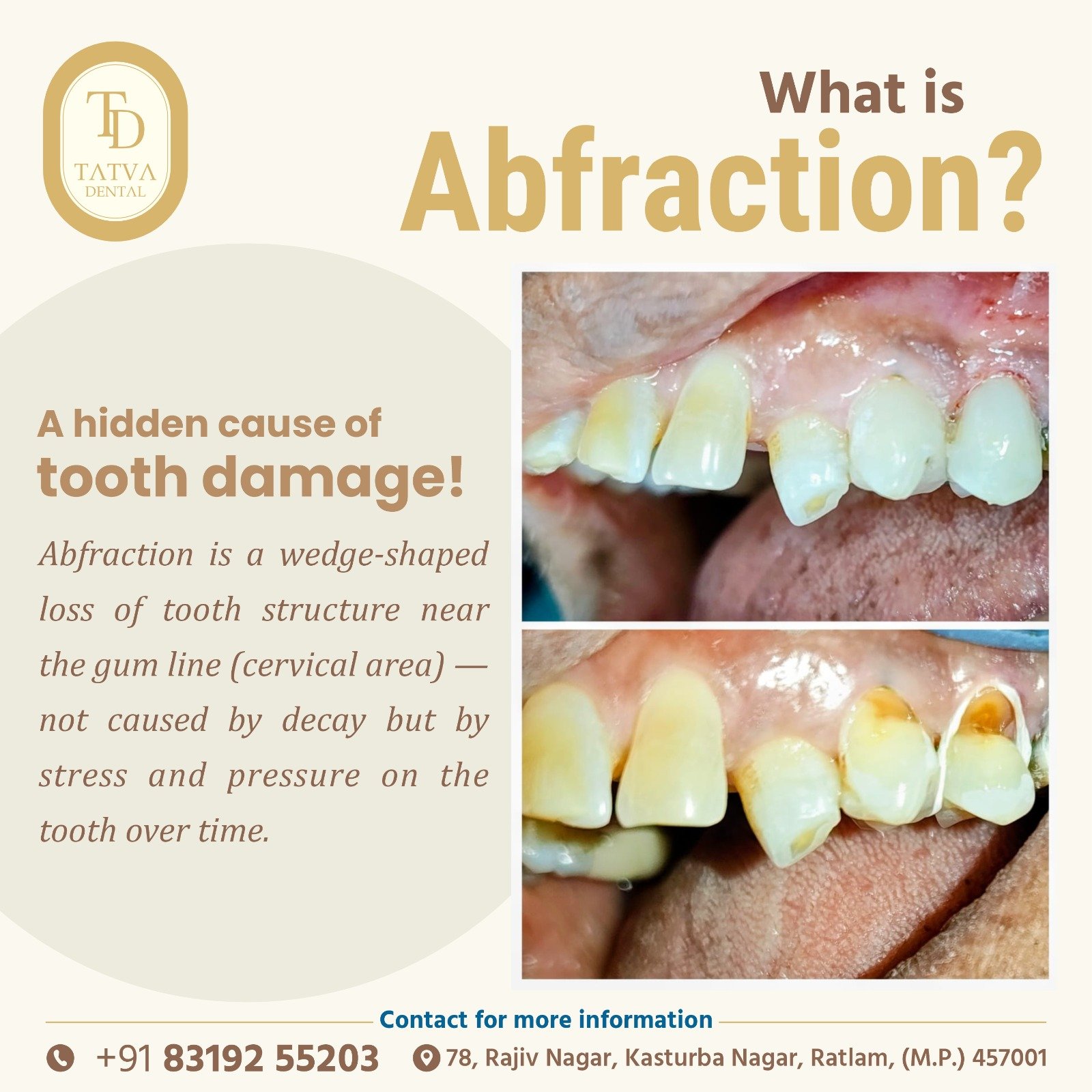
A Hidden Cause of Tooth Damage
Many people notice small notches or grooves near the gum line of their teeth and assume it’s due to brushing too hard or tooth decay. However, these wedge-shaped defects are often the result of a lesser-known condition called Abfraction — a non-carious cervical lesion caused by stress and pressure on teeth, not by bacteria or decay.
At Tatva Dental, Ratlam, our experienced dentists Dr. Nikita Dubey and Dr. Rajat Dubey (MDS) specialize in diagnosing and treating abfraction lesions with precision and care to restore tooth health and prevent further damage.
Understanding Abfraction
Abfraction is the mechanical loss of tooth structure that typically occurs at the cervical area, where the tooth meets the gum. It appears as a V-shaped or wedge-like notch. Unlike cavities, abfraction doesn’t involve bacterial activity — it results from excessive flexing forces applied to the tooth during biting or grinding.
When biting forces are uneven or excessive, they create microscopic stress fractures at the tooth base. Over time, this continuous pressure leads to loss of enamel and dentin, exposing the sensitive layer beneath and increasing the risk of tooth sensitivity.
Causes of Abfraction
Several factors contribute to the development of abfraction lesions:
- Bruxism (Teeth Grinding or Clenching) – Continuous grinding exerts pressure on teeth, leading to microfractures.
- Bite Misalignment (Malocclusion) – Uneven distribution of chewing forces puts stress on certain teeth.
- Aggressive Brushing – Using a hard-bristled toothbrush or abrasive toothpaste worsens the lesion once enamel weakens.
- Age-related Enamel Loss – Natural enamel thinning over time makes the cervical area more prone to stress damage.
- Occlusal Stress – Repetitive chewing on one side of the mouth creates flexing forces at the neck of the tooth.
Signs and Symptoms
Abfraction can develop slowly and often goes unnoticed until sensitivity starts. Common signs include:
- V-shaped notches or grooves near the gum line
- Tooth sensitivity to cold, heat, or sweet foods
- Gum recession around affected areas
- No visible decay, but enamel loss present
- Discomfort during brushing or biting
In severe cases, abfraction lesions can deepen and cause cracks in the tooth, leading to pain, enamel erosion, and even structural weakening.
How Abfraction Differs from Other Tooth Conditions
| Condition | Caused By | Appearance | Treatment |
|---|---|---|---|
| Abfraction | Stress and flexure on teeth | Wedge-shaped notch at gum line | Filling, bite correction, night guard |
| Abrasion | Improper brushing or hard bristles | Shallow smooth loss near gum line | Change brushing habits |
| Erosion | Acidic foods/drinks | Rounded enamel loss | Diet modification, fluoride |
| Caries (Decay) | Bacterial activity | Dark, soft lesion | Cavity filling, restoration |
Abfraction often coexists with abrasion or erosion, which can make diagnosis tricky — that’s why professional evaluation at a dental clinic like Tatva Dental is essential.
Diagnosis at Tatva Dental
Our diagnostic approach includes:
- Comprehensive oral examination
- Bite analysis to identify occlusal stress points
- Digital X-rays and intraoral photography for lesion assessment
- Sensitivity and vitality tests to ensure tooth health
With these advanced diagnostic tools, Dr. Rajat Dubey and Dr. Nikita Dubey ensure accurate identification of the lesion’s cause and tailor a treatment plan accordingly.
Treatment Options for Abfraction at Tatva Dental Ratlam
Treatment aims to restore lost structure, relieve sensitivity, and prevent further progression.
1. Restorative Fillings
Tooth-colored composite fillings are used to rebuild the lost structure and protect the exposed area. These restorations strengthen the tooth and improve appearance.
2. Night Guard for Bruxism
If grinding or clenching is the cause, a custom-made night guard helps reduce occlusal stress and prevent further damage.
3. Bite Adjustment (Occlusal Equilibration)
For misaligned bites, our dentists may perform selective tooth reshaping to balance the chewing forces evenly.
4. Desensitizing Treatments
Special fluoride varnishes or desensitizing agents help minimize sensitivity and protect enamel.
5. Behavioral and Oral Care Modifications
Guidance on proper brushing techniques, use of soft-bristled toothbrushes, and non-abrasive toothpaste to prevent worsening of the lesions.
Prevention Tips for Healthy Teeth
✅ Brush gently using a soft-bristle toothbrush.
✅ Avoid abrasive toothpaste and vigorous brushing.
✅ Manage stress to reduce grinding habits.
✅ Wear a mouthguard if you clench teeth at night.
✅ Schedule regular dental check-ups to monitor enamel wear.
Preventive care is always more effective than restorative treatment. Early intervention can save your natural teeth and prevent sensitivity or fractures.
Why Choose Tatva Dental, Ratlam?
At Tatva Dental, we combine modern dental technology with personalized care to treat and prevent conditions like abfraction.
Expert Dentists: Dr. Nikita Dubey & Dr. Rajat Dubey (MDS)
Comprehensive Care: From diagnosis to restoration and bite correction
Comfort-Focused Approach: Gentle, patient-friendly treatments
Advanced Tools: Intraoral scanners, digital X-rays, and precision restorations
We’re committed to helping you maintain your natural smile for life!


